The Importance of a Comfortable Writing Situation
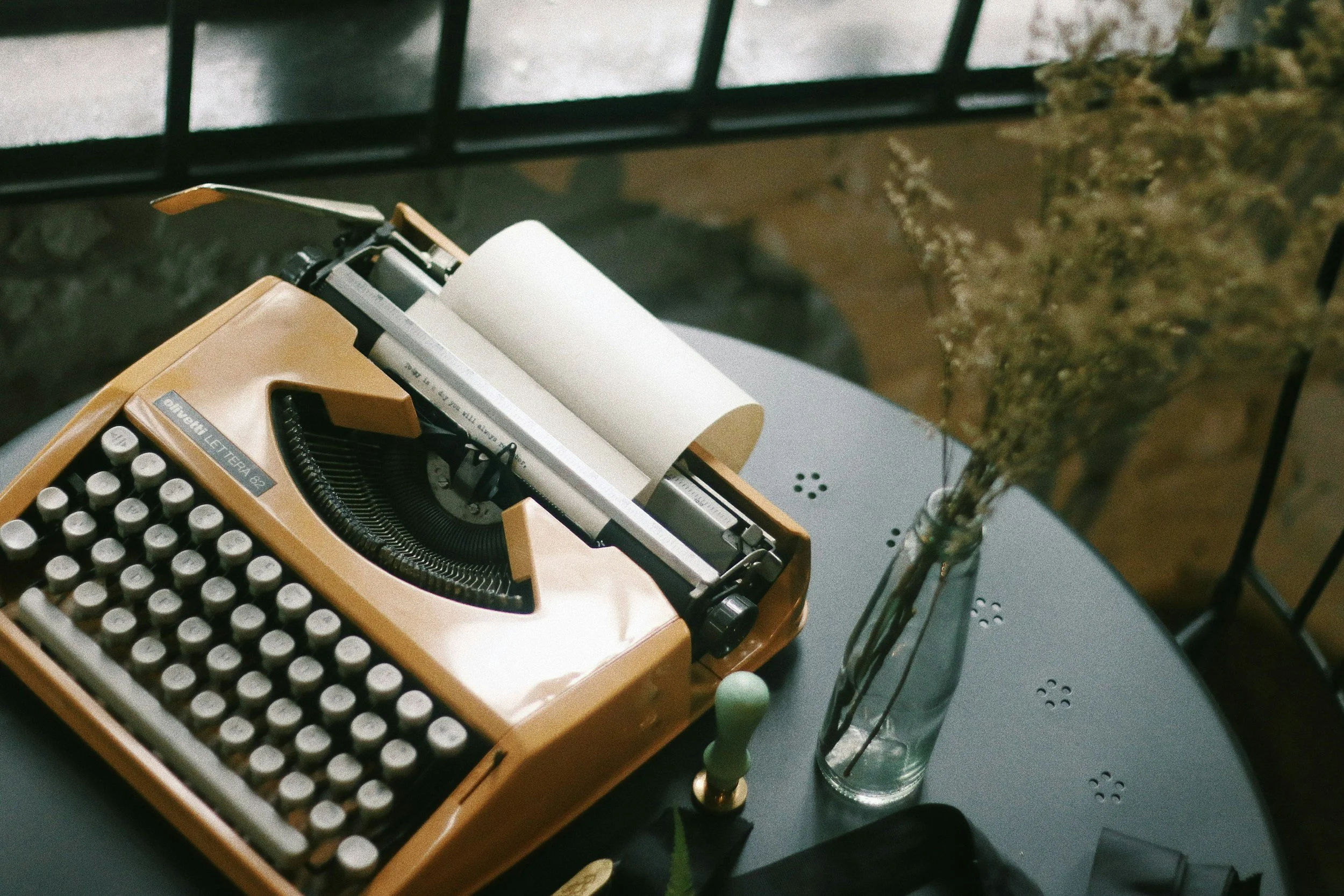
Not that I use a typewriter.
By Thio Isobel Moss
I recently watched a vlog from a wonderful author showing her adorable writing station, complete with mugs of tea and scented candles. It was lovely, with a view, charming knick-knacks, and perfect lighting. Inspired, I thought I’d give you a text-based tour of my own writing habitat!
From Chaos to Function
I’ve been starting stories since I was eighteen, but I rarely get far. Early desks were fine for small bursts, but as health issues emerged in my thirties, I realized my old setup—legs pressed against a shelf—was unsustainable. I improvised: particle board storage units topped with plywood, covered with a rag rug. Surprisingly effective, it was here that Blind Spot first took shape.
Life intervened, of course. Job changes brought new stress, and a regular desk wasn’t viable. I hunch forward at screens, fixating for hours, and arthritis in my spine made this a bad mix.
Enter the Recliner Solution
My brother Oz found a solution: a blue-light filtering monitor, a wireless keyboard and mouse, and a recliner with a lap desk. My basement became my studio — semi-finished, drafty, and 40 degrees year-round, but functional. For two years, I wrote there, clad in my wide-legged "retirement pants," multiple layers, slippers, fingerless gloves, and fluorescent-41 glasses.
Oh, yeah — sexy!
Titan, my beautiful cat, had a piano bench within petting distance.
Mobility and Comfort
Then I bought a laptop and became a writer on the go! I was free! I could go anywhere, do anything!
The recliner moved upstairs to my bedroom, wedged in a corner, with a C-shaped end table for my laptop stand. Titan has his spot on the bed.
Behind me, on the wall: my Blind Spot cover painting, a print of Blood Heir (book by Ilona Andrews, art by Luisa Preißler ), and dreams of more cover art for my collection. My nightstand holds my BDH mug (chipped but beloved) and a signed copy of Bloodlines by Dennis Young. In front, a dresser displays proof copies of Blind Spot, pressed-glass bud vases, and tissues.
Lessons Learned
Comfort is crucial. A dedicated studio is optional. Creativity will find a way, even in a small, chaotic, multi-purpose space. I paint in my living room, store crafting materials in the dining room, and write wherever it fits. Function and comfort matter more than aesthetics.
If you’re of a creative bent, don’t let your environment stop you. Adapt, improvise, and make it work. Having an outlet to express yourself is what counts!
