On the Hazards of Historical Fiction
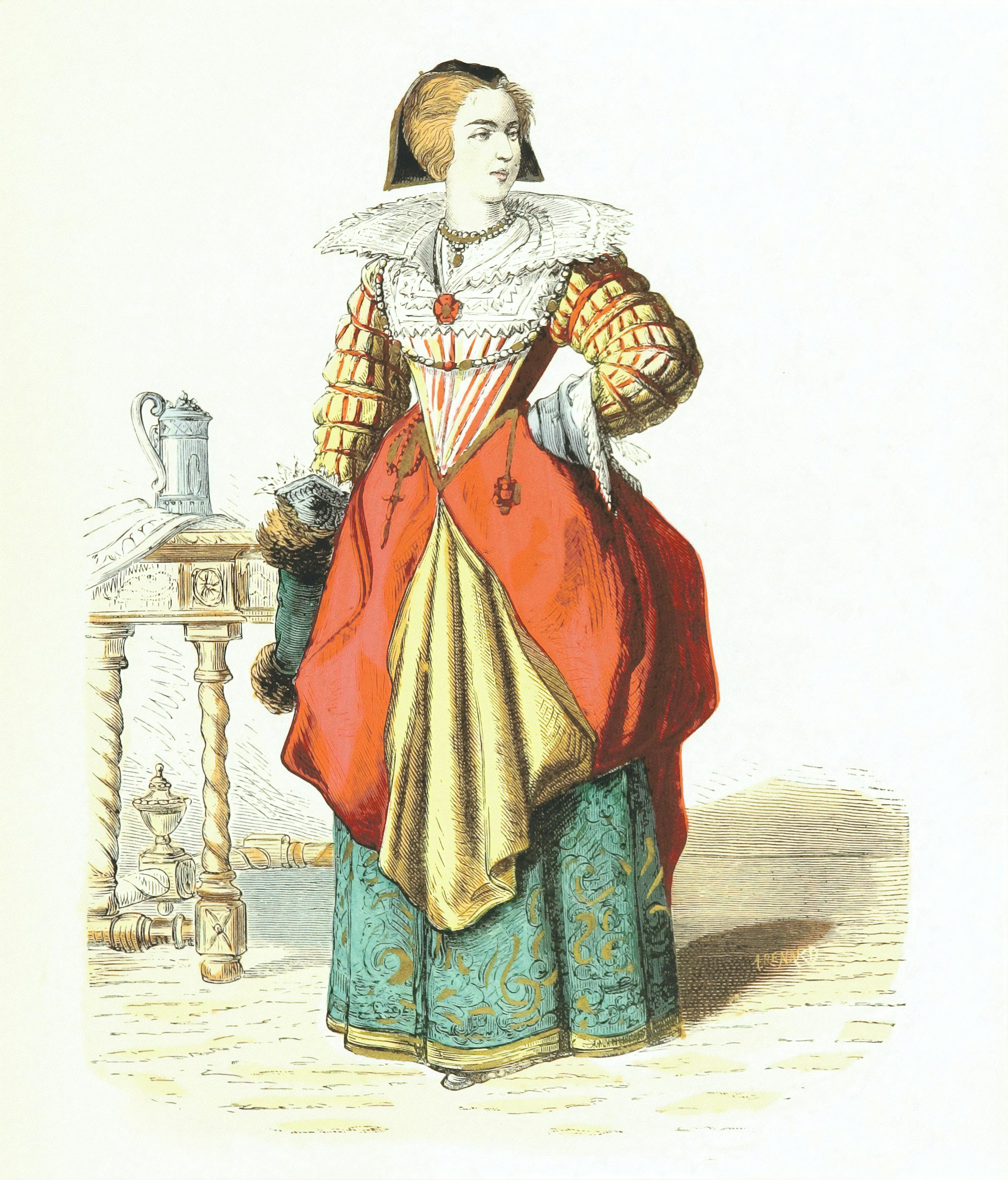
It takes more than a corset to fool me!
By Thio Isobel Moss
I love Jane Austen.
While I do have a favorite film adaptation of Pride and Prejudice, I happily rewatch the others because each highlights different elements or evokes a different mood. Sometimes I order Canadian bacon and pineapple pizza (yes, I’m one of those people). Other times, I want a supreme — with stuffed crust, extra garlic butter, ranch, parmesan, and pepper flakes.
Life is too short for disappointing pizza.
I feel much the same way about historical fiction. Sometimes I want to be fully immersed in a time period. Other times, I want the accouterment without the baggage.
Historical fiction becomes particularly tricky when an author aims for realism. Many readers don’t realize, for example, that when the residents of Meryton hope Lydia Bennet will “come upon the town” in Pride and Prejudice, they are hoping she will be forced into prostitution. Curious? Dr. Octavia Cox’s close readings of classic literature are well worth your time.
Language has evolved—dramatically.
I still have the prologue to The Canterbury Tales memorized from high school. I even know what it means, more or less, but for years, my cousins always guessed it was German when I quizzed them. Eventually, I ran out of cousins, or they informed each other of my tricks.
In college, during a British Literature exam, we were asked to translate a passage of Middle English. We had not studied Middle English, nor the evolution of English over time. I’m still not entirely sure what that exercise was meant to test, but it was…memorable.
This evolution of language is one of the great challenges of historical fiction. Too authentic, and the text becomes alienating. Too modern, and the illusion collapses.
Recently, I reviewed two historical mysteries: For Services Rendered and The Whitechapel Full Moon Society. I gave the former five stars and the latter four. Both were fantastic (highly recommend). Interestingly, their overall reader ratings skewed in the opposite direction.
I know I have very specific tastes (it once caused a fight with a former roommate), but I think the difference came down to a particular craving. For Services Rendered deliberately evoked a blend of Jules Verne and Sherlock Holmes while still feeling original. It read like a Victorian novel. I was there, in the fog-filled streets, as much as a contemporary book can take you there.
The Whitechapel Full Moon Society, by contrast, vividly portrayed the filth and misery of the era, but the plot, dialogue, and characters didn’t fully convince me that I was in the East End. This isn’t exactly a criticism. In fact, it likely makes the book more accessible — and more appealing — to a broader audience.
Sometimes I want spiced pecan tarts (and I do mean spiced). Sometimes I want Watergate salad. There is a food for every occasion—and a book.
If more authors succeeded consistently in replicating historical language, style, and atmosphere, I’m not sure I would appreciate it as much. Finding For Services Rendered felt like discovering a piece of my childhood — an unexpected treasure I hadn’t realized I was longing for. Still, I’m not a child anymore, and I don’t wish to stay in the past for very long.
And no single author could ever hope to satisfy my greed for new stories.
So I suppose I’ll keep trying new flavors.
