Creative Energy Vs. Discipline:
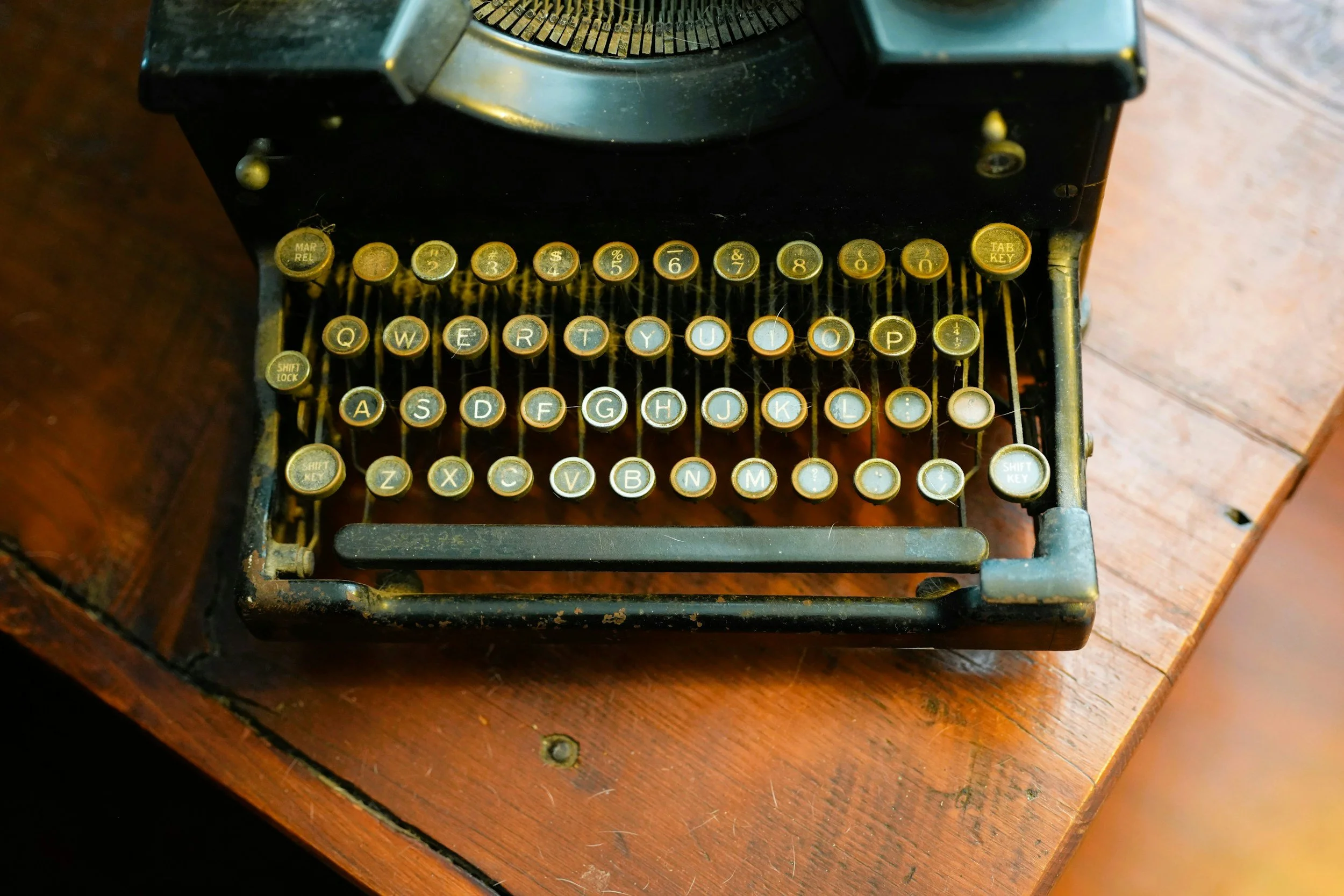
Choose your weapon.
Or A False Binary:
By Thio Isobel Moss
Do you remember how, a decade or two ago, quicksand was everywhere? I think it must have been trending as a plot device for some time and was in cartoons, dramas, books, and even comedy skits.
Writing advice should be treated like quicksand. Poke it with a stick to see if it’s solid, then move forward slowly and cautiously.
Some of the advice is excellent and will really help aspiring writers. A lot of it, in my experience, will make you question everything you do, essentially creating a form of paralysis. There is no one-size-fits-all in writing.
Agatha Christie once wrote a book in three days.
She was, without doubt, a disciplined writer, but she only managed that feat once. She also described Absent in the Spring as “the one book that satisfied me completely.”
We all should be so lucky.
Many of the world's greatest novels, however, took a very long time to write. Lord of the Rings took between twelve and seventeen years. The Catcher in the Rye took J.D. Salinger ten years. Les Misérables took twelve.
So, despite reading numerous accounts of how creative energy trumps discipline or vice versa, my hot take is to find out what works for you.
I’m prepping my outline for my third novel, and I can already say what worked for me with book one no longer works. The outline for Blind Spot was a rough list of events that I knew had to be in the book, with no more than a sentence or two to remind me of the specifics.
Bump was a little more involved, but thankfully, a much shorter book.
Objects in the Mirror is going to be…interesting. I intend for it to be shorter than Blind Spot (nervous laughter), but we’ll see. The outline, however, is very intricate. Not only do I want it to give the narrative a solid structure, it is also a guide to emotional currents, nuanced behaviors, relationship arcs, subplots, color schemes, humor, and more.
I started this journey thinking I was a pantser with a few notes. The idea of my story surprising me was massively appealing. Then, I transformed into a Plantser—more detailed and focused on measured pacing.
Now, my notes are threatening to drown me, even with half a draft already written.
At this time and for this novel, I am a planner. I strongly believe that is the only way Objects will work.
However, it will still surprise me. It already has.
While wrestling with the outline, I paused, took a deep breath, and asked, “What should the characters be feeling here?”
If you’re getting the “ick” from the cliché, just know I am, too. However, it was the right question to ask. I had been trying to arrange things in a logical pattern with steady progression, and never taking human nature into account. It changed the entire structure.
W. Somerset Maugham is credited with the saying, when an author finishes a novel, they are an expert in writing that novel.
That has been my experience. I have had periods where creative energy drives me on, and I write twenty pages in the same time it normally takes me to write four. There have been times when I’ve given myself a set number of pages, and good or bad, I write those pages—often shutting things down afterward, feeling like I have no business writing a birthday sentiment in a card, let alone an entire book.
Generally, I go back the next day and find that what I wrote was good, maybe needing a light polish.
The one habit that I’ve fallen into that has remained constant is that when a story idea won’t leave me alone, I make a note of it. When I need a writing exercise, I’ll take out those notes and flesh them out a bit, start building the world, the culture, and the plot. A few weeks later, I might write a few scenes. Over time, it builds up until I have a substantial chunk of a story.
Then, I leave it to mature.
I don’t think about it. I don’t write on it. I work on my current projects, other story ideas, or some just-for-fun stuff. If the story still prods me months later, sitting like a rock in my head, refusing to budge, it goes on the schedule.
Yes, I have story ideas, even partial stories, on my computer that may never see the light of day. For me—and this will not be true for everyone—if the idea doesn’t compel both my creativity and my discipline, it’s a nonstarter. Maybe it needs time or a new angle. Maybe it’s a short story or a poem, and not a novel. Time will tell.
Bottom line—do not let someone’s take on how things are “supposed to be” prevent you from writing a book. Writing is a deeply personal thing and reflects our cognitive makeup. It’s clarifying; liberating. Writing is an intimate introduction and a metamorphosis into something wholly new.
The writing process is less a prescription and more of a moving target. (Insert an Effie Trinket quote here.)
