Old Story, Modern Retelling:
It’s time for a revival!
By Thio Isobel Moss
The Other Bennet Sister Spoilers ahead; be warned.
So often, for inspiration, we return to where we’ve been and what we already know. Rather than the same old remakes we’ve been laboring under for years, I’ve recently seen new iterations: what I call the “Young Sheldon” treatment, as seen in Young Sherlock, and the change in the point-of-view character, notably featured in The Other Bennet Sister.
I have a confession. I did not expect to like Young Sherlock, but I did, and I did not expect to like The Other Bennet Sister, but I am.
With the former, the ads for it felt a bit trite—a tired bid to achieve something new with something old, and let's face it, poor Sherlock has been stretched, patched, shifted, dismantled, and remade, sometimes with one project overlapping another, for ages. At this point, it seems almost daring to use him yet again.
I haven’t seen all of the recent iterations, but I’m still hoping for a return of Benedict Cumberbatch and Martin Freeman as Mr. Holmes and Dr. Watson. I adored the BBC’s Sherlock. With Young Sherlock, I’m not entirely certain what the secret sauce is. They have a fabulous cast, an unlikely and hopelessly layered plot full of cliffhangers, and the most hilarious homages to the books. It works.
Because of its cast and link to literature, I connect it with The Other Bennet Sister. Dónal Finn is not who I would have chosen to play Mr. Hayward, but, thank goodness, I’ve never chosen the cast for anything off the page. I had read about this adaptation prior to watching it. I was given to believe that there was a “libertine” in it, and I knew Mr. Finn was part of the cast. Well, I doubt I’m the only one who thinks he could convincingly play a very successful libertine.
My family has debated this issue, even after Mr. Hayward made his initial appearance. It was only when Mr. Ryder came along that we figured things out.
I am so very grateful to have been wrong.
With literacy diminishing, and with it a knowledge of and appreciation for literature, so rapidly, it won’t surprise me if Wordsworth has something of a revival based on Dónal Finn’s reading alone. Yes, he’s attractive, and I wish he were a few years older, but more than that, he’s far more talented than I initially gave him credit for. And seeing him pulled into a lake was both a lovely nod to the 1995 version of Pride and Prejudice and terribly funny. Outrageously funny! Hands down, my favorite scene. He does annoyed so well!
As for the role of Mary, Ella Bruccoleri was an inspired choice. I find her very successful in her portrayal of constant mortification distilled into a calm exterior. Her occasional bursts of stronger emotions are almost painfully relatable. Her mild manner, her chronic self-doubt, her timing, her gestures…this performance lands.
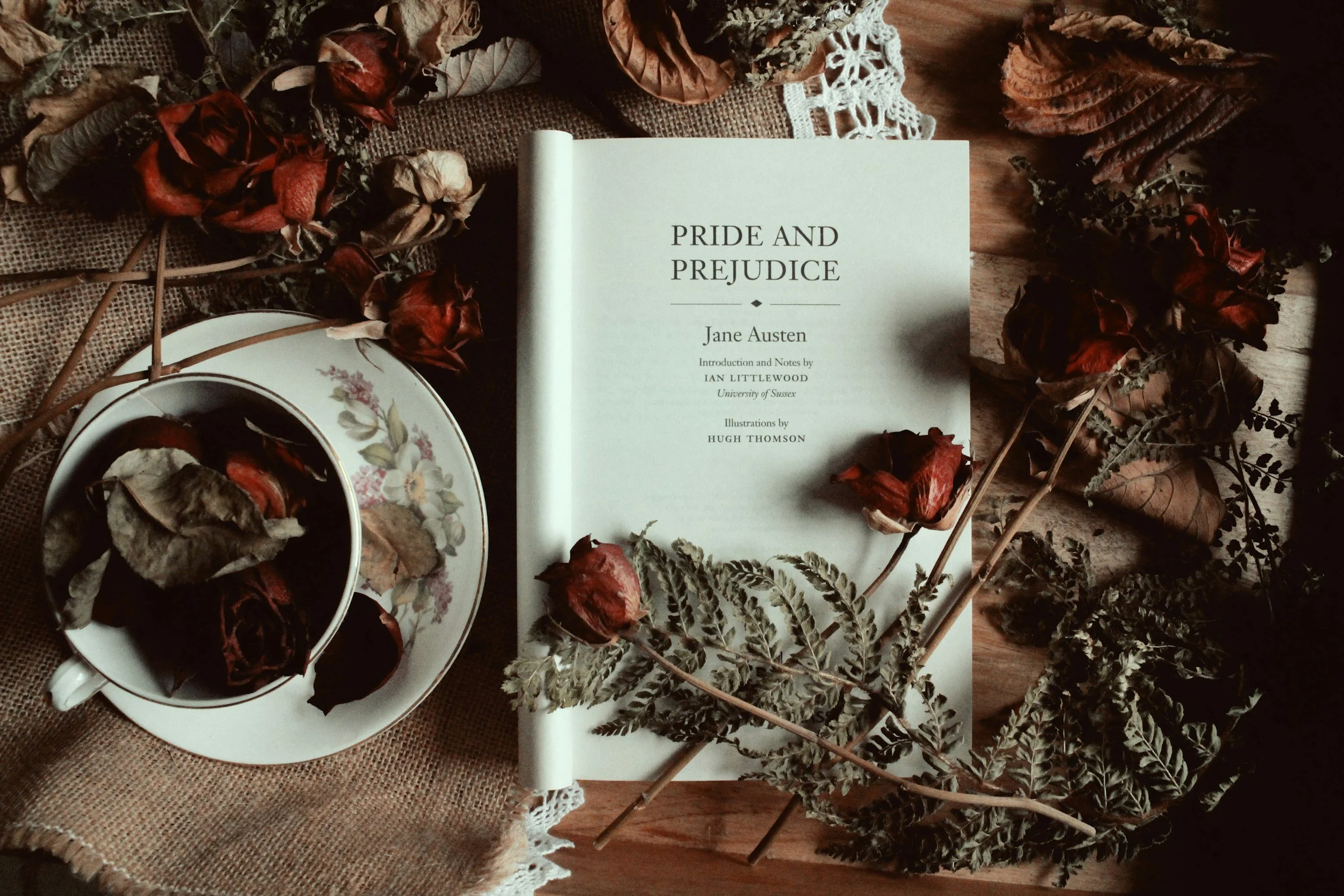
There were many standouts among this cast, but I need to skip on to the book by Janice Hadlow itself. I have not read it yet, but as an avid Jane Austen fan, this has jumped to the top of my TBR. However, judging by the miniseries, and bless them for making it a miniseries, I am enthralled by how little needed to be changed from Austen’s work to condemn both Mr. and Mrs. Bennet; complicate Charlotte, Elizabeth (I would love to see Poppy Gilbert as Lizzie in the traditional Pride and Prejudice), and Jane: restore Kitty and Mr. Collins (another favorite; Ryan Sampson was perfect), and elevate Mr. Hurst. And, of course, we have a whole new view of Mary.
I’m considering the possibility that the “libertine” I read of may connect more to the book than the show. Laurie Davidson makes for a rather endearing libertine, and one rather lacking in conviction. We’ll see.
I’ll not prattle on too long since I’ll review the book after I read it, but this was an absolute work of genius. It’s rare for me to say that about something that builds on another work of genius, but this works against Pride and Prejudice, not for it. That friction is immaculately done; it’s delicate, but absolute.
I hated it when Once Upon A Time made Peter Pan evil, but I hope that Ms. Hadlow has launched a new trend here. I want to know what other Austen characters could be seen in such a new and arresting light.
A little tangent here at the end—remember Disturbed’s cover of The Sound of Silence? Paul Simon embraced the rendition, saying that music can gain new life and meaning long after its original release. I have to believe that Jane Austen would appreciate what The Other Bennet Sister accomplishes; inspired by her original work, it both refreshes its source material and invites comparison. Not at all bad for two hundred and thirteen years in print.
And, hopefully, it will also help reignite a worldwide passion for good storytelling and the wonder of a moment captured in a poem.
Happy reading!
